This is a continuation of looking at gaps, especially with a point-of-view from a hiker, but with lessons for life.
The older I get, the more I find myself like Clint Eastwood in Gran Torino or Walter Matthau in Grumpy Old Men. I want to have little to do with irritating, snot-nosed, noise-making imps that interrupt my solitude. (okay, maybe not to that extent, but I am truly afraid of turning into that type of man.)
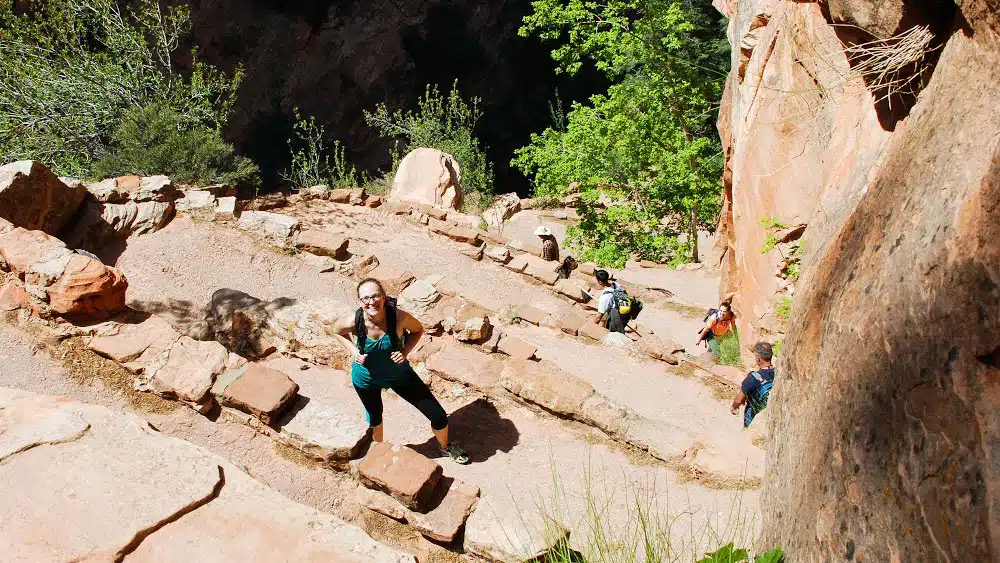
When I was on Angels’ Landing in Zion NP, during the sections of the Refrigerator Canyon and Walter’s Wiggles (yes, that is the name of the sections) …
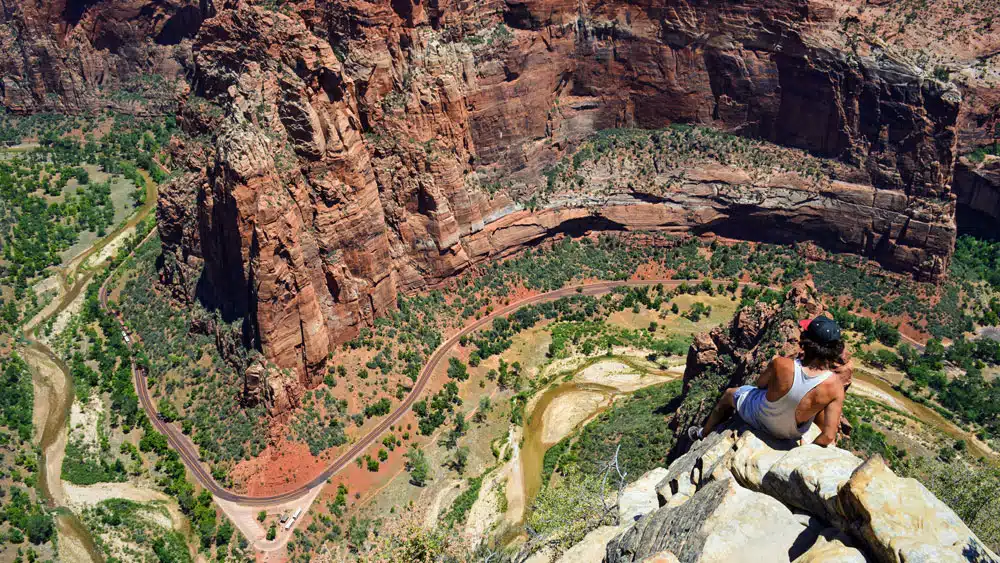
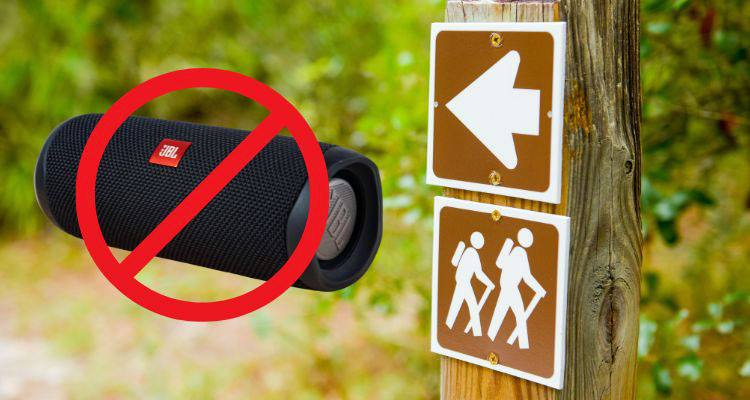
I was greatly irritated by a teen male playing his music at a level which you could hear for a half a mile away. (first two of these pictures ripped from Zion Ponderosa Ranch website, the others are mine)


I tolerated this for a bit, but finally tried to be polite (yeah, right) and totally cordial (sure old man) and asked him to stop, or at least use earbuds. Trekology claims this is one of the basic rules of etiquette on the trail. Another request, they could at least play better music … their electronic genre was pathetic. Let’s go classic rock. He quieted his music, for about 3 seconds, then turned the volume back up, possibly even louder.
Was this an etiquette issue or a generational gap issue?
Generational gaps exist. And I can honestly say I witness it on the trails. And I can honestly say I may have even been guilty of propagating the generational gap.
I think the trail is a place that can bridge generational gaps. My only regret about my habit of hiking is that I waited way too late in my life to start. I did get outside some in high school. Mostly spots an hour away from my home in north Mecklenburg county, just north of Charlotte. After that, I was too much a city boy and hiking was downtown, malls, and urban parks.
Now, I love it. I hope to share that joy with my son and his family. And, I went hiking with my grandson when he visited a few months ago.

Generational hiking has strengths. Planning is very important …
- proper trails … able to trekked by tiny legs and wrinkly legs
- more stops … for the older and the younger
- pack appropriate … snacks especially, think of the little one and their appetite
- think safety … little minds might not need to be near ledges, older legs might need less instability
- time frames … I want to be done before the 4p dinner specials (just kidding, I don’t do that, yet)
- adaptable hardware (carrying the tot may be needed as part of the trek.)
What other preparatory items would you include?
A generation gap can be bridged on the right trail …
- The beauty of nature can be exhilarating for all ages. For me, I get to slow down, unplug, get away from the hustle. Younger eyes get fascinated by a world beyond the screens and phones. They get experiences that Meta can’t truly give you (don’t get me wrong, I love using my Occulus to visit places I may never get to … Petra, Egypt, New Zealand.) But the smell, the touch, the engagement with reality can’t be duplicated.
- Quality time without the bombardment of distractions. Hiking requires teamwork. Conversations can take place.
- Both generations can share their strengths. Natural curiosity of younger generations gives a renewed appreciation. Back to nature experience can be passed along from the older generation. The lessons flow both directions between all generations.
Doing things together is a great way to bridge generational gaps. Hiking can be one of those things, and a great one at that.
Now, let’s talk about the 2023 hiker’s profile as revealed by Statista’s survey:
- Hikers tend to be older – 37% of them are Millennials, 32% belong to Generation X, and 14% are Baby Boomers. Only 17% of the respondents were part of the Generation Z.
- There are more female hikers (51%) than males (49%).
- Most hikers come either from a nuclear family (27%) or a couple household (23%). Only 4% of them belong to a multigenerational family.
- 32% of hikers received a college education, while 27% have a bachelor’s degree, which shows a tendency for people with further education to be interested in hiking.
- 36% of hikers stated that they have a middle-house income, while 40% have a high income.
- The largest number of hikers come from large cities (27%) and medium-sized towns (25%). At the other end, cities with over 1 million inhabitants (8%) and megacities with over 5 million inhabitants (6%) are poorly represented.
 Muddy Shoes by Todd
Leave a comment